
Mentara's foundational training. A biointegrative approach that unites mind and body, based on neuroscience, epigenetics, and humanistic psychosomatics.
Pedagogical Coordination
Maria Del Mar

MODALITY
START
Coming soon
DURATION
40 months
LANGUAGE
ACCREDITATION
DIPLOMA
CERTIFICATION
ECP European
Certificate of Psychotherapy
The human being as totality:
Emotions, history, relationships, and personal dimension.
Somatic Psychotherapy is an integrative approach that unites mind and body, based on neuroscience, epigenetics, and psychosomatics, viewing the human being as a whole—in their emotions, history, relationships, and personal dimension.
More than just treating symptoms, it addresses the root of the problem, helping to reduce stress, suffering, and blockages, while promoting self-awareness, emotional balance, and personal development.
Conducted by specialized professionals, it can take place in individual, couple, family, or group settings—adapting to each person's needs. It is a profound therapeutic experience that not only provides support during difficult times but also enhances awareness, self-discovery, and a sense of purpose in life.
01
Body
02
Mind
03
Emotion
04
History
04
Link
To know, to apply,
to understand and develop.
Four learning axes that connect theory and clinical practice throughout the 40-month program.
To grow, to transform, to transmute,
changing perspective... are
fundamental elements
when we intend to do
better and better.
Maria Del Mar
Twenty-four themes. Two halves.
A 40-month journey.
The program is structured in two main parts — Part 1 lays the theoretical, embryological, and relational foundations; Part 2 delves into clinical practice, ethics, supervision, and the birth of the therapist.
This inaugural theme will highlight the philosophical and historical bases of body psychotherapy, including its lines of development and current perspectives.
Referring to the bases of somatic psychotherapy, a conceptualization and definition of body psychotherapy will be carried out, as well as the identification of its objectives and relevance:
The training process and the organizing field.
Character tendencies and stages of development.
Energy blockages, armor and muscular tensions
The elements of touch.
The dimensions of life.
The embryonic layers.
Somatic resonance.
Energy reservoirs and endocrine glands.
This is a theme dedicated to Grounding and its relationship with the roots of our existence:
Transgenerationality.
Origin and evolution of the concept.
The objective of this theme will be the definition and typification of rooting, its general principles, background and systemic influences. Ancestry and genealogy.
The types of rooting and the lack thereof.
Impulse qualities and motor fields.
Contact through movement.
Theme given preferably in retreat. This theme will be emphasized on:
Embryological definitions, types of touch, transitions and types of breathing.
Emotions, rebirthing and pre and perinatal matrices.
Neuroscientific definitions associated with the Autonomic Nervous System.
Intra and Extrauterine Life.
Development of the Nervous System.
Self-regulation and co-regulation.
This theme will explore the first relationships that are established in a baby's life:
How it is received, mothered and cared for.
Maternal regulatory function.
Questions of primary physical and emotional support.
The importance of healthy bonding and its relationship with neurodevelopment will be highlighted. Stages of maturation and developmental states.
Work with the five senses. Includes the five basic needs referred to by Albert Pesso. Expression of needs.
Notions of security and belonging.
Nutrition and oral phase.
Theme dedicated to the definition of spaces and limits, including their healthy and unhealthy consequences. (Psychopathology and exploration of character tendencies in the present day).
Association with new structures and character trends according to Dyrian Benz.
The Polyvagal Theory will also be explored in depth on this topic, as well as the phase of autonomy, aggressiveness and aspects of emotions.
Anal phase, masochism and psychopathy.
Victim and aggressor.
This theme is dedicated to sexuality and vitality. Beyond the importance of historical and intercultural contexts, the topics of polarity, eroticism vs. sexuality, contextualization, dysfunctions, trauma, and sexual abuse will be highlighted.
Contribution of neuroscience, among other important and fundamental themes for this topic.
Construction of Eros.
This part of the program will highlight themes that encompass our heart, from the challenges in loving contact to the heart's pulses and its qualities.
Bonding (outside and inside therapy).
Transference, countertransference and resonance.
Associations with neurobiology and the role of hormones, among others.
(Self)compassion, empathy and self-care.
This topic is dedicated to the communication system, focusing on the throat and ears. Therefore, it will be crucial to discuss the anatomy and physiology involved.
Neural circuits and respiration.
Healthy communication vs unhealthy communication.
Language (acquisition, development, disorders and challenges).
This topic will cover the topics of communication and cognition associated with vision and contact (skin).
Intuition and sense of direction.
Concepts related to trauma (1st part).
Qualities and pathologies associated with the gaze.
Focus and images.
Dreams and the creative neurological process.
Face-heart connection of the Polyvagal Theory.
Contact modes.
Types of mirror and further exploration of the topic of resonance, already covered in topic 8. Mirror neurons.
Introception, exteroception and proprioception.
Module related to spirituality from the perspective of body psychotherapy.
The meaning of life and death will be addressed, as well as the transpersonal and the qualities of the Essence, the true contact with our interior.
Transition process, types of birth and death.
Point of individuality.
Integrative process
In this theme, students will include the topics covered so far, beginning a new stage in their training. The focus is on their birth and development as therapists, delving into more clinical topics:
The therapeutic relationship.
The ethics and deontology of the body psychotherapist.
The beginning of therapy (anamnesis, creation of the bond, establishment of the therapeutic contract).
Qualities and challenges of the therapist, among others.
Qualities of the contract with oneself.
From here, students can submit their first monograph and, with the agreement and evaluation of the pedagogical council, begin their internship.
Ethical Foundations in Psychotherapy:
Knowledge of the organic functions of our brain and agility in the Mind-Body association beyond the Cartesian division.
In this topic, a distinction will be made between trauma and shock.
Trauma is a very broad area and very present in body psychotherapy. Therefore, and given that its relevance is indisputable, this topic arises with the aim of delving deeper into trauma in the issues of transference and countertransference, finding space for the traumas of the client, but also of the psychotherapist.
In this theme, bridges will be made between Psychodynamics and Body Psychotherapy, including fundamental concepts such as object relations, construction of the Self and individuation processes.
Through this theme, the student will delve deeper into the challenges of being a therapist. They will become aware of their resources, develop new tools and identify and work with their challenges (the shadow).
This topic will delve deeper into the theme of spirituality in psychotherapy, a fundamental topic where concepts such as bridges, Essence, compassion, detachment and impermanence will be referred to.
Through this theme we will identify the neurophysiological bases of psychopharmacology and how it affects contact channels and bodily, psychoaffective and energetic responses.
This topic will address sexual disorders and potential clinical interventions by the body psychotherapist. In addition to the client, emphasis will be placed on the therapist's own sexual maturation process.
How to take care of yourself to take care of others?
From eroticism to healthy sexuality.
Archetypes of sexuality.
Beliefs, culture and consciousness link.
Libido and sexual drive.
Gender relationship.
Sexual pathologies, perversions and disorders.
The construction of our fantasies, images whether in a waking state or in an altered state of consciousness, is undoubtedly the sum of self-regulation strategies between our external and internal world, and vice versa.
Deepen understanding and work with these dimensions in the clinic to open up the possibility of transformation and creativity as a development process.
Creative process.
The power of the subconscious.
Working with beliefs and archetypes
Inclusion of the Jungian approach and perspective.
In the advanced supervision theme, several monitorings will be carried out on the therapist and their cases.
Theoretical and practical framework of the cases.
Clinical discussion of intervention possibilities.
The styles of therapists or styles in body psychotherapy will also be explored in depth.
Definition and structuring of psychotherapeutic processes.
In the subject of reviewing the training process, the 40 months of training will be concluded.
Some fundamental themes and concepts will be reviewed and the awareness of Being a Body Psychotherapist will be deepened.
Integration of all knowledge and learning through practical and theoretical experiences. The last two modules (24th and 25th) will be given jointly and in retreat.
For professionals who want
to become psychotherapists.
The training is aimed at healthcare professionals with a bachelor's degree. For other professional profiles, a minimum bachelor's degree (even in other fields) and an approved curriculum analysis are required.
Diploma of Mentara +
Certification European ECP.
In Portugal, Mentara is certified nationally by DGERT (General Directorate for Employment and Labour Relations) and accredited at the European level by the EAP (European Association for Psychotherapy) as an EAPTI (European Accredited Psychotherapy Training Institute).
With the Advanced Specialization Diploma in Biointegrative Somatic Psychotherapy and affiliation with the EAP, graduating students will be able to apply for the European Certificate of Psychotherapy (ECP).
Mentara is also a founding member of FEPPSI (Portuguese Federation of Psychotherapy) and APPC (Portuguese Association of Body Psychotherapy).
General Directorate for Employment and Labour Relations, national certification as a training entity.
European Association for Psychotherapy — European Accredited Psychotherapy Training Institute.
European Certificate of Psychotherapy – European credential for psychotherapists.
A pedagogical direction with
vast clinical and academic experience.
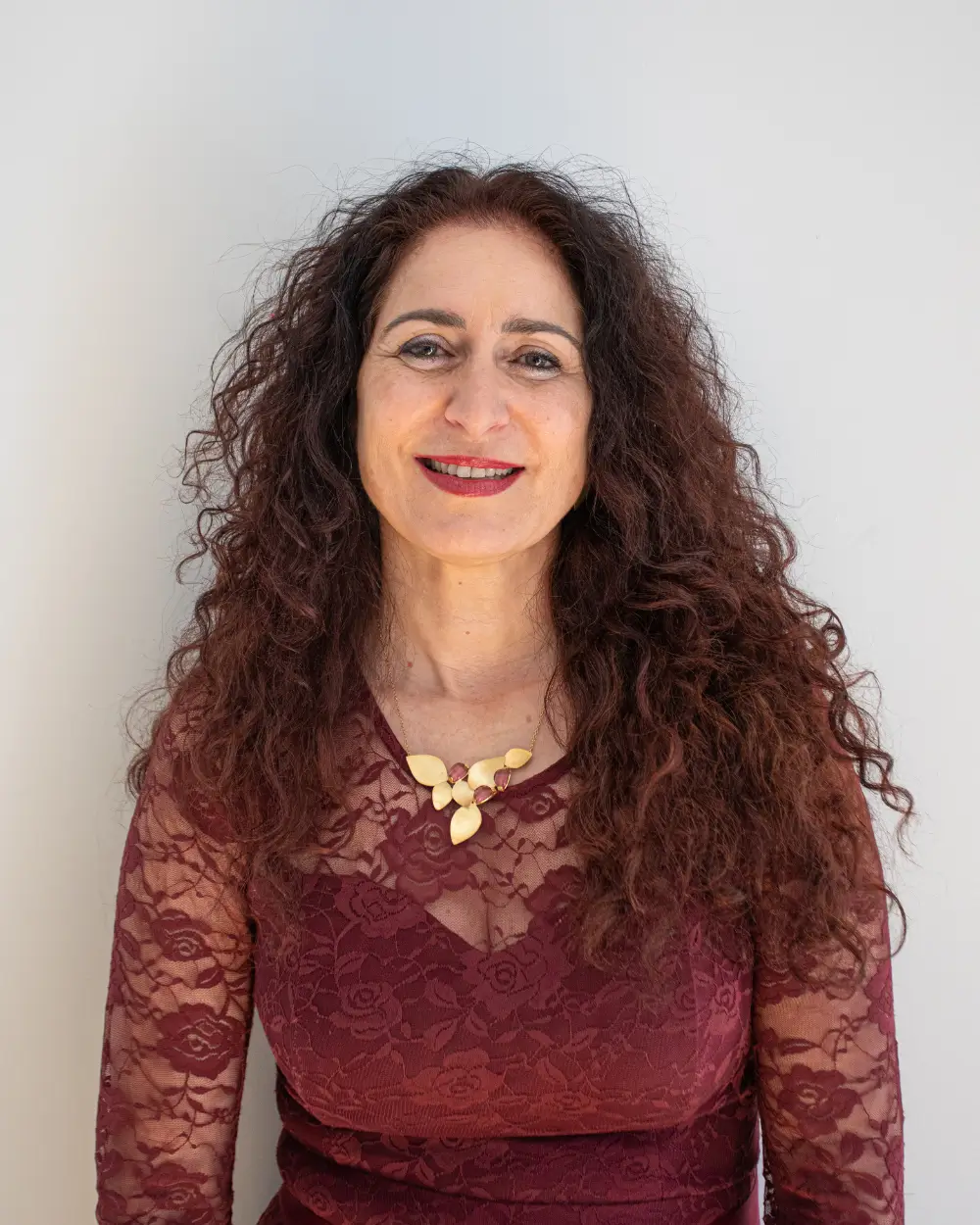
Maria del Mar is a renowned specialist in Somatic Psychotherapy, with extensive clinical and academic experience.
She is the founder and director of Mentara (formerly CPSB), Pedagogical Coordinator, and part of the Board of Directors of the International Course in Somatic Psychotherapy. She is a Clinical Psychologist, Somatic Psychotherapist, Couples Psychotherapist, Naturopath, and Homeopath – a pioneer and visionary in the field of holistic human health.
His vision and leadership have impacted the lifestyle and happiness of thousands of people, with transformative repercussions for future generations.
Information practice.
Retreats (once a year) must be in person.
Dates on the Calendar
Registration is open year-round.
24 topics in two main parts.
Continuous nature throughout the 40 months.
Mentara · Rua Camilo Castelo Branco, No. 2 — 2nd Floor Left.
1150-084 Lisbon, Portugal
Languages of instruction: Portuguese, Spanish, and English.
Let's go to speak
Regarding your application.
Please fill out the contact form so that one of our colleagues from the Training Department can get in touch and answer all your questions.
Our team will conduct document analysis, curriculum evaluation, and schedule the admission interview with the Clinical Director and the Training Department.
geral@mentara.eu
+351 217 935 326
The training which originated
Mentara. Forty months.
of Somatic psychotherapy.
One of the leading international training programs in somatic psychotherapy — accredited by the European Association for Psychotherapy and open to students from Portugal, Spain, Brazil, and the global online community.
Questions frequent
To register, fill out the form and send your CV and cover letter.
Health professionals with a degree who work for another public are required to have at least a degree (even in other professional areas) and a curriculum analysis.
No. Retreats (once a year) must be held in person.
The training assessment is continuous. 2 assignments, 2 tests and 2 monographs will be required.
Mentara is a training center certified by DGERT and duly accredited by EAP (an international organization).
This course constitutes specialized training in the area of somatic psychotherapy and does not confer an academic degree in Psychology nor does it award the professional title of Psychologist. In Portugal, Psychology is a regulated profession, the practice of which depends on holding the legally required academic qualifications and valid registration with the Portuguese Order of Psychologists, in accordance with its Statute. Attending or completing this course does not, in itself, qualify one to practice as a Psychologist nor does it legitimize acting as a psychotherapist in Portuguese territory, and it does not replace the legal requirements applicable to regulated professions. It is the responsibility of each trainee to ensure compliance with the legal framework applicable to the exercise of their professional activity.
 English
  Português
  Español