Body Reading in Psychotherapy: Techniques and Applications
Learn to read the body that speaks – what posture, gesture and facial expression reveal about the client's emotional state. Twelve hours online to integrate nonverbal communication into your clinical practice.
This course prepares psychotherapists and health professionals to use body reading as a complementary tool in therapeutic practice.
The training provides practical techniques and theoretical knowledge for interpreting nonverbal cues — broadening understanding of patients' emotional and behavioral states and fostering more sensitive and effective interventions.
objectives
Five skills to bring into your clinical work.
Twelve hours structured around five objectives — combining theoretical framework, observational practice and case analysis.
01
Understand the theoretical foundations of nonverbal communication and its relevance in psychotherapy.
02
Develop the skills to identify and interpret postures, gestures and facial expressions.
03
Explore how body reading applies in different therapeutic and cultural contexts.
04
Practice observation techniques and the analysis of real cases.
03
Integrate body reading into clinical practice ethically and effectively.
What you will learn
Four learning areas that cut across practice.
01
Observation techniques
How to observe and interpret bodily signals — posture, gesture, facial expression, micro-expressions — without labeling.
02
Cultural patterns
Identifying nonverbal patterns across different cultural contexts — for a practice that is sensitive to difference.
03
Practical application
Using body reading for more precise therapeutic interventions — adjusting the intervention to what the client's body is saying.
04
Empathy and connection
Strategies to foster empathy and therapeutic connection through nonverbal communication — fine-tuning attunement.
Training delivered by
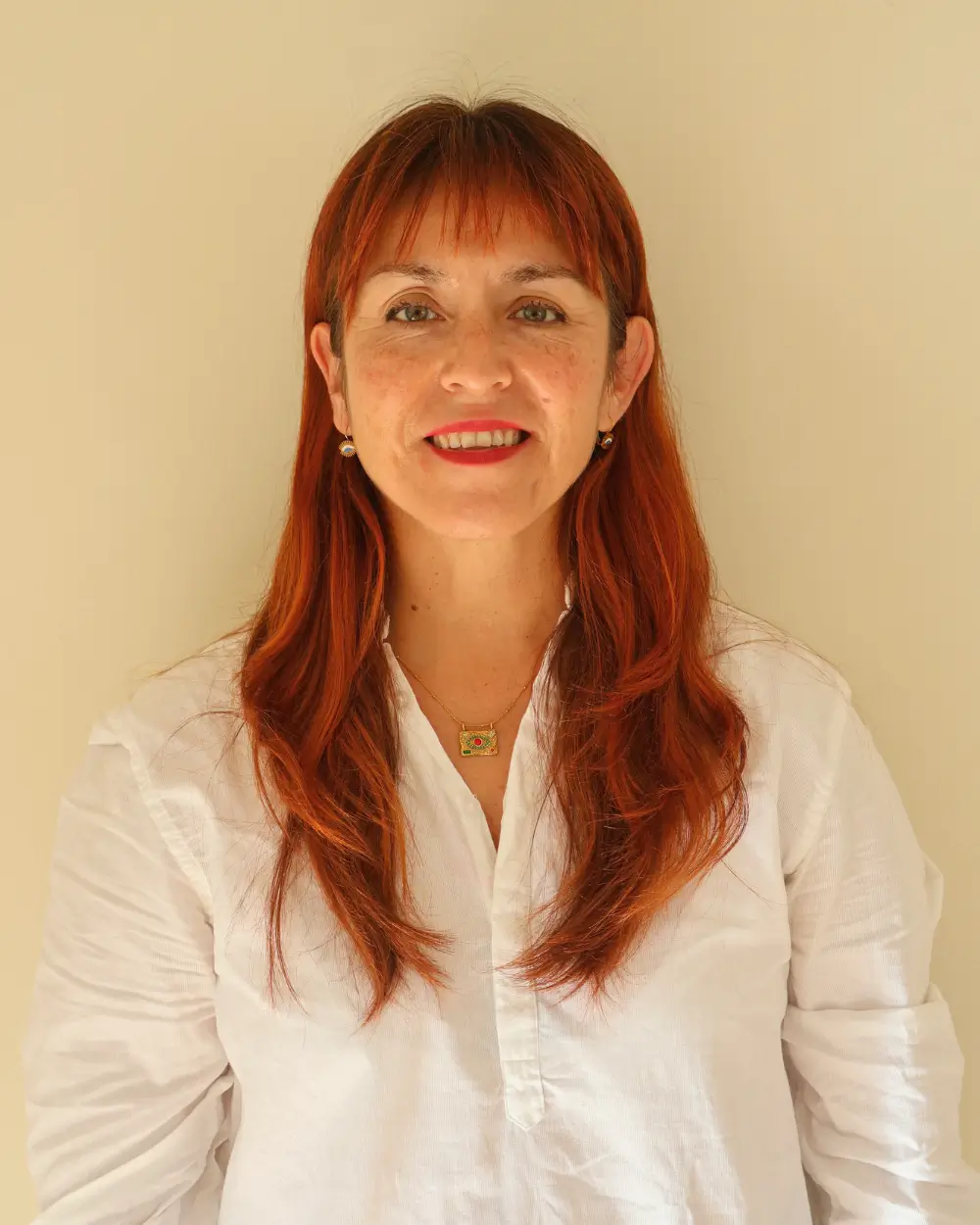
Cláudia Toro
Psychotherapist
Psychotherapist trained in Somatic Psychotherapy, whose practice focuses on body-mind integration and on reading nonverbal signals as a doorway to deep clinical work.
Her approach combines theoretical rigor with experiential sensitivity — a facilitation style that values observation, reflection and the development of practical skills that apply across different therapeutic contexts.
Secure your place
Twelve hours to integrate a nonverbal communication into your clinical practice.
With the exception of the Specialization in Biointegrative Somatic Psychotherapy and the Dual Specialization in Integrative Somatosensory Psychotherapy, the other courses do not require an interview.
Can I choose the course format?
Most courses are available in different formats (in person, online and hybrid). Students can choose their format, as long as it is available.
Will I receive a diploma at the end?
Mentara is a training center certified by DGERT and accredited by the EAP. All students will receive a certificate of attendance on completing the course.
Can I suspend my enrollment?
Yes, in most courses attendance can be suspended. To do so, please request the Mentara course regulations.
Certification and Accreditation
Professional training certificate
The training is delivered by Mentara, ensuring compliance with the quality standards required for professional training in Portugal.
At the end of the course, participants who meet the assessment and attendance criteria receive a Professional Training Certificate recognized nationally.



 English
 Português
 Español